Kidney Stones Center: Comprehensive Care & Advanced Relief

Associated Urologists of North Carolina
Kidney stones are hard mineral and salt deposits that form inside the kidneys. Passing a kidney stone can be one of the most painful medical experiences, but prompt urologic care offers rapid pain relief, effective stone removal, and long-term prevention strategies.
Whether you are experiencing an acute kidney stone episode or want to prevent recurrent stones, our team provides comprehensive diagnostic and surgical solutions.
Symptoms of a Kidney Stone
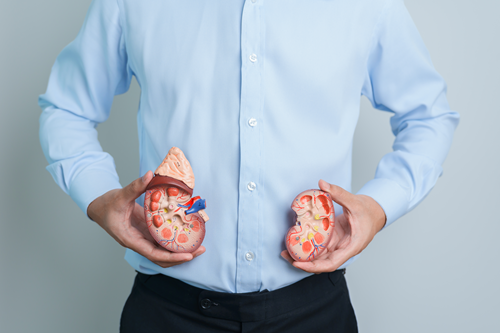 Smaller stones may remain in the kidney without causing symptoms. However, when a stone moves into the ureter (the narrow tube connecting the kidney to the bladder), it can block urine flow and cause severe discomfort:
- Severe, Sharp Pain: Pain in the back, side (flank), or lower abdomen that often comes in intense waves.
- Radiating Pain: Discomfort spreading to the lower abdomen, groin, or testicles/labia.
- Urinary Changes: Blood in the urine (pink, red, or brown urine), painful or burning urination, or a constant urge to urinate.
- Nausea & Vomiting: Caused by shared nerve pathways between the kidneys and the digestive tract.
- Fever & Chills: A medical emergency if accompanied by pain, as it can signal a severe infection behind a blocked stone.
Common Causes & Stone Types
Kidney stones form when urine becomes concentrated, allowing minerals to crystallize and stick together:
- Calcium Oxalate Stones: The most common type, often linked to dietary factors, dehydration, or metabolic imbalances.
- Uric Acid Stones: Associated with high-protein diets, gout, chronic dehydration, or metabolic syndrome.
- Struvite Stones: Fast-growing, large stones that typically develop in response to recurrent urinary tract infections (UTIs).
- Cystine Stones: A rare genetic condition causing the kidneys to excrete excess amino acids.
Diagnostic Evaluation
When you visit our clinic with suspected kidney stones, we perform quick, precise evaluations:
- Low-Dose Non-Contrast CT Scan: The gold standard imaging test to accurately pinpoint the stone’s exact size, location, and hardness.
- Ultrasound & X-Ray: Used for quick evaluation or monitoring known stones without radiation.
- Urinalysis & Blood Work: Checking for signs of infection, blood, kidney function, and uric acid or calcium levels.
Treatment Options for Kidney Stones
Treatment depends on the size, location, and type of stone, as well as the severity of your pain.
1. Medical Expulsive Therapy (Passing Small Stones)
Stones smaller than 5 millimeters frequently pass on their own with:
- Aggressive Hydration: Drinking plenty of water to help flush the stone.
- Alpha-Blockers (e.g., Tamsulosin / Flomax®): Prescription medications that relax the muscles in your ureter to help the stone pass faster and with less pain.
2. Extracorporeal Shock Wave Lithotripsy (ESWL)
A non-invasive procedure ideal for small-to-medium stones located in the kidney or upper ureter.
- How it works: High-energy acoustic shock waves are focused from outside the body directly at the stone, breaking it into tiny, sand-like fragments that pass naturally in your urine.
3. Ureteroscopy & Laser Lithotripsy
A routine, minimally invasive outpatient procedure for stones located anywhere in the ureter or kidney.
- How it works: A thin, flexible scope is guided through the natural urinary tract (no incisions) directly to the stone. A precise laser fiber vaporizes or breaks the stone into fragments, which are then extracted using a micro-basket. A temporary stent may be placed to ensure smooth urine drainage.
4. Percutaneous Nephrolithotomy (PCNL)
The procedure of choice for very large, complex, or “staghorn” stones inside the kidney.
- How it works: Performed through a tiny incision in your back, allowing special instruments to shatter and suction out large stones directly from the kidney in a single setting.
Long-Term Stone Prevention
Once your stone is treated, preventing future stones is our priority. Over 50% of people who form one stone will develop another within 5 years without preventive care.
- 24-Hour Urine Collection Analysis: Detailed evaluation of your urine chemistry to identify specific mineral excesses or deficits.
- Dietary & Lifestyle Modifications: Personalized advice on fluid intake, sodium reduction, calcium optimization, and dietary oxalate management.
- Targeted Preventive Medications: Medications (such as potassium citrate or thiazide diuretics) to balance urine chemistry and stop crystals from forming.
Request an Appointment
Urologists located in Apex, Cary, Clayton, Dunn, Raleigh & Wake Forest, NC. Now providing Telehealth appointments