Urologic Cancers: Comprehensive Care & Advanced Treatment

Associated Urologists of North Carolina
A diagnosis of a urologic cancer can feel overwhelming, but modern urologic oncology offers more precise, effective, and less invasive treatment options than ever before. Urologic cancers affect the organs of the urinary tract and male reproductive system, including the prostate, kidneys, bladder, and testicles.
Early detection, accurate staging, and personalized treatment plans are key to achieving the best possible outcomes while preserving your quality of life.
1. Prostate Cancer
Prostate cancer is one of the most common cancers among men. Because many prostate cancers grow slowly and remain confined to the gland, treatment is tailored specifically to the aggressiveness of the disease and your overall health.
- Active Surveillance: For low-risk, slow-growing tumors, active treatment may not be immediately necessary. Instead, the condition is closely monitored with regular PSA blood tests, MRI scans, and periodic biopsies.
- Robotic Radical Prostatectomy: Minimally invasive surgical removal of the prostate gland using robotic assistance to maximize nerve-sparing and preserve urinary control and sexual function.
- Radiation Therapy: High-energy rays used to destroy cancer cells, delivered either externally (External Beam Radiation Therapy) or internally via implanted radioactive seeds (Brachytherapy).
- Systemic Therapies: Advanced options for metastatic or high-risk disease, including Hormone Therapy (Androgen Deprivation Therapy), Targeted Therapy, and Immunotherapy.
2. Kidney Cancer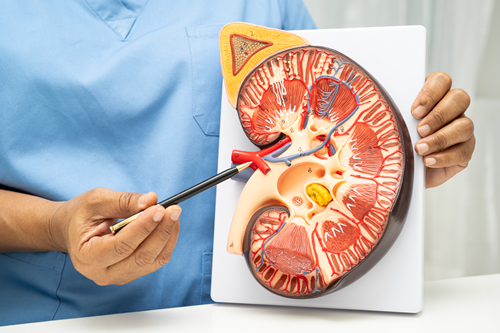
Kidney cancer often develops without early symptoms and is frequently discovered incidentally during routine imaging (like an ultrasound or CT scan) for another condition.
- Robotic Partial Nephrectomy: The preferred surgical option for smaller kidney tumors, where the surgeon removes only the tumor while saving the surrounding healthy kidney tissue.
- Robotic Radical Nephrectomy: Surgical removal of the entire affected kidney for larger or centrally located tumors.
- Ablative Therapies: Minimally invasive options like Cryoablation (freezing the tumor) or Radiofrequency Ablation (heating the tumor) for select patients who may not be candidates for major surgery.
- Targeted & Immunotherapy: Advanced systemic medications designed to block tumor blood supply or harness the body’s immune system to treat advanced kidney cancer.
3. Bladder Cancer
Bladder cancer most commonly begins in the cells lining the inside of the bladder (urothelial carcinoma). The most frequent warning sign is blood in the urine (hematuria), even if it occurs just once and causes no pain.
- Transurethral Resection of Bladder Tumor (TURBT): An endoscopic procedure where the surgeon removes bladder tumors through the urethra without abdominal incisions. This serves as both a diagnostic tool and an initial treatment.
- Intravesical Therapy: Medication (such as BCG vaccine or chemotherapy) delivered directly into the bladder through a small catheter to target remaining cells and prevent recurrence in non-muscle-invasive bladder cancer.
- Robotic Radical Cystectomy: Surgical removal of the bladder for invasive tumors, followed by urinary diversion (such as a neobladder or ileal conduit) to create a new way for your body to store and pass urine.
- Systemic Chemotherapy & Immunotherapy: Used before or after surgery, or as primary treatment for advanced stages.
4. Testicular Cancer
Testicular cancer is highly treatable and often curable, even when diagnosed at an advanced stage. It most commonly affects younger men between the ages of 15 and 35. A painless lump or swelling in the testicle is usually the first sign.
- Radical Inguinal Orchiectomy: Surgical removal of the affected testicle through a small incision in the groin, which provides both a definitive diagnosis and the primary treatment.
- Retroperitoneal Lymph Node Dissection (RPLND): Surgical removal of lymph nodes in the back of the abdomen to prevent or treat cancer spread while preserving nerves responsible for normal ejaculation whenever possible.
- Surveillance: Close monitoring with routine imaging and blood tests (tumor markers) for early-stage disease after surgery.
- Chemotherapy & Radiation Therapy: Highly effective treatments used for specific cancer types (seminoma vs. non-seminoma) or advanced stages.
What to Expect at Your Oncology Consultation
- Comprehensive Review: We evaluate your medical history, diagnostic imaging (CT, MRI, PET scans), pathology reports, and blood work.
- Multidisciplinary Approach: Your case is evaluated using the latest clinical guidelines to determine whether surgery, medical therapy, or a combination provides the best path forward.
- Personalized Treatment Plan: We discuss all available options, risks, and expected outcomes so you can make informed decisions about your care.
Request an Appointment
Urologists located in Apex, Cary, Clayton, Dunn, Raleigh & Wake Forest, NC. Now providing Telehealth appointments